Impact & Outcomes
10 Years of Impact. Building the Next Model for Economic Mobility.
Ideal Education has spent a decade building the components of an economic-mobility system: career and technical education, youth workforce development, paid work-based learning, apprenticeships, employment pathways, entrepreneurship, reentry, supportive services, and community ownership. From 2016 through 2025, Ideal secured more than $9.8 million in documented public program awards, complemented by additional capital investment in community infrastructure. IWOWS brings these proven components together into one measurable pathway designed for responsible replication.Impact and funding data updated August 29, 2026. Historical figures are based on Ideal Institute of Technology institutional reporting, grant records, and publicly available state award documentation.
Ten-year impact scorecard
A decade of execution, in numbers
These are reported results from Ideal Education, not projections. Every figure is drawn from the reporting listed at the foot of this page.
1,350+
Graduates Empowered
$1M+
Paid Through Work-Based Learning
$1.7M+
Scholarships Awarded
4,000+
Individuals Served Through the Center for Social Impact
8+
Student-Run & Social Enterprises
1,200+
Certifications Issued Annually
Annual figure, not a cumulative total.
Ten-year impact figures reported by Ideal Institute of Technology through July 2025. Current institutional developments updated through August 2026.
Impact pillars
Ten areas where the record is documented
Each pillar below is an operating part of the ecosystem, with the verified figure attached where one exists.
Education
An accredited institution, not a short-course vendor
Ideal Institute of Technology opened in 2016 and enrolled its first student the same year. It now operates as an accredited institution serving adult learners, career changers, and people who were never handed a workable pathway the first time around.
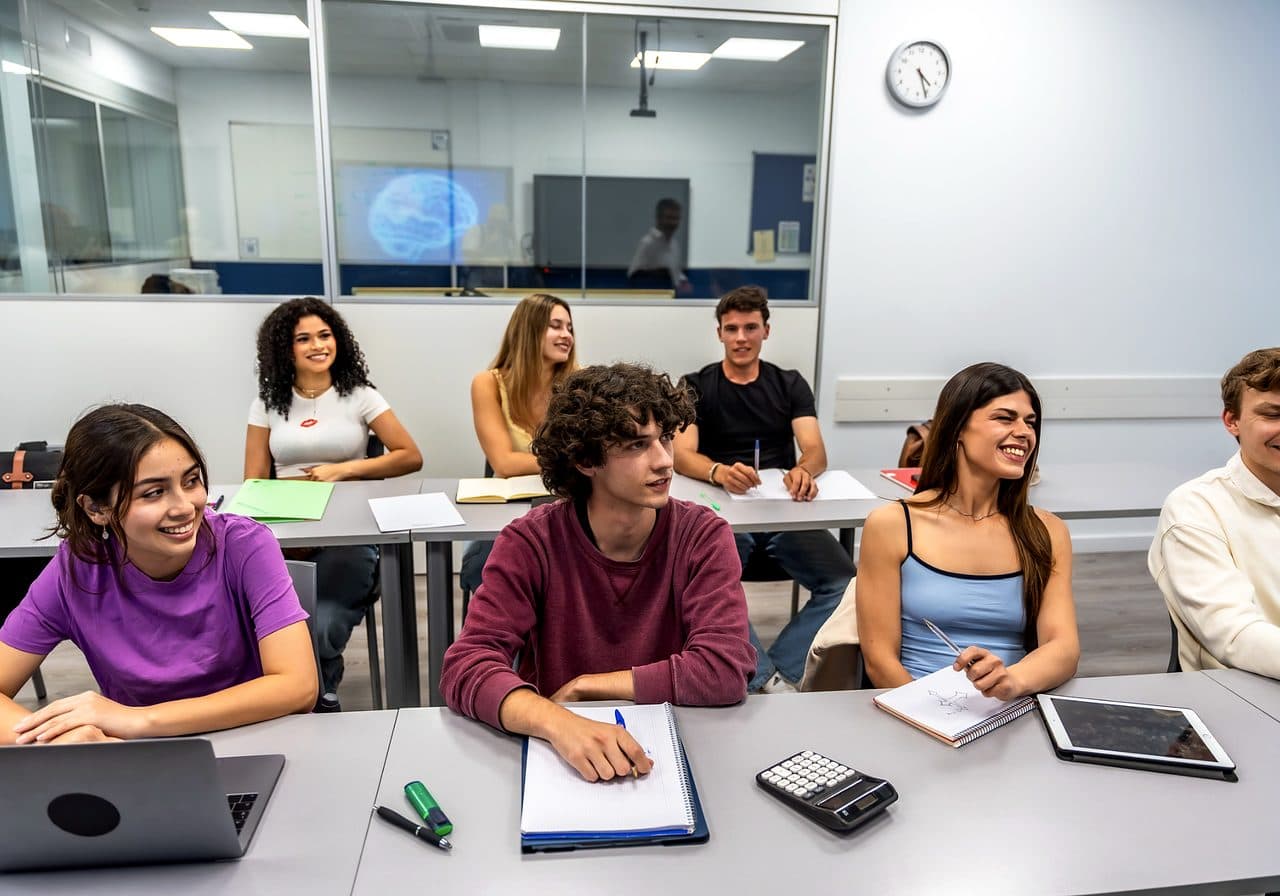
Programs are organized around credentials employers recognize rather than seat time. Classroom instruction connects to hands-on labs, industry certification, and supervised work, so a completion signals that a participant can actually do the job.
Accreditation matters to funders because it puts curriculum, outcomes, and learner protections under external review. Ideal holds a Middle States accreditation term running through July 2032.
1,350+
Graduates empowered over ten years

Youth
Career pathways that start before graduation
Ideal CTE Academy prepares middle and high school students for college, careers, entrepreneurship, and the future of work through career and technical education pathways, project-based learning, dual enrollment, and work-based learning.
Youth work has been part of the organization since its first year. Work First New Jersey and Out-of-School Youth programming began in 2016, reaching young people who had already left the system before anyone built them a route back into it.
Youth programming runs on the same architecture as the adult side: exposure to real industries, a credential that counts, paid experience where possible, contact with employers, and a written plan for what happens after the program ends.
2016
First year of Work First New Jersey and Out-of-School Youth programming
Paid Work-Based Learning
Income while learning, not after
People on public assistance rarely fail training because of ability. They fail it because a training schedule and a paycheck compete for the same hours. Ideal answered that by paying participants to work while they learn.
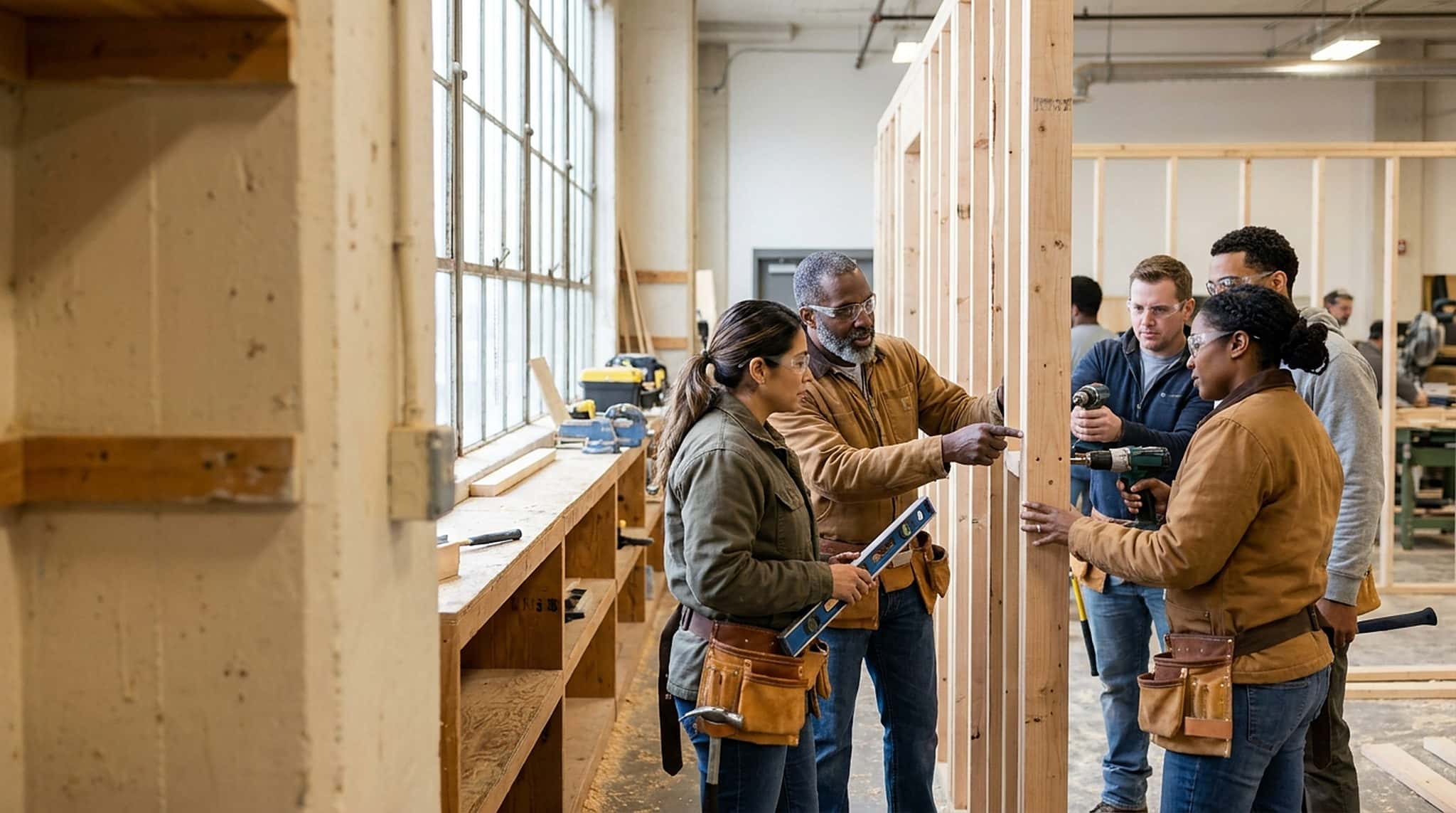
Paid work happens inside supervised business units and production labs, on real projects with real customers and real deadlines. Participants leave with earnings, hours logged, a portfolio, a supervisor who can vouch for them, and a reference that is not a classmate.
Across ten years, more than one million dollars has moved directly to participants through work-based learning. For a funder, that is the clearest line in the model: the money reaches the household during the training, not only after it.
$1M+
Paid directly to participants through work-based learning

Entrepreneurship
Ownership is a legitimate mobility pathway
A job is one ceiling. Ownership is another. Ideal treats entrepreneurship as a first-class outcome rather than an enrichment activity, with support for e-commerce ventures, contractor pathways, food businesses, service companies, and cooperative enterprises.
The organization also runs its own enterprises, and students staff them. Eight or more student-run and social enterprises have operated across the ten-year period, which means the entrepreneurship curriculum is taught by people currently running businesses rather than only describing them.
8+
Student-run and social enterprises operated

Reentry
Multi-year second-chance work, funded on the public record
Reentry is where workforce programs are tested hardest, and it is where Ideal has the longest run of documented public funding. The New Jersey Department of Corrections has awarded the organization NJLEAD funding in four consecutive years, 2022 through 2025.
The work pairs education and credentials with paid experience, supportive services, and employers willing to hire people with records. Telling someone to get a job is not a reentry strategy, and the funding history reflects a program built for the real timeline.
The awards below are the documented NJLEAD line only. They are not a complete account of the organization's reentry funding.
$899,870
Documented NJDOC NJLEAD awards, 2022-2025
Higher Education
A work-based college model, built with a university partner
Between 2023 and 2024 Ideal expanded its career and technical education offering and built a work-based college model with Centenary University, so participants could pursue a degree without stepping away from the paid work that keeps a household stable.
Scholarship support is the other half of that access question. Over ten years, more than $1.7 million in scholarships has been awarded to Ideal students, which for many participants is the difference between enrolling and deferring indefinitely.
$1.7M+
Scholarships awarded to Ideal students
Institutional Capacity
Accreditation, compliance, and the ability to hold public contracts
Capacity is what separates a promising pilot from an organization a public agency can actually contract with. Ideal earned Middle States accreditation in 2022 and holds a term running through July 2032.
Alongside accreditation sits a decade of contract performance: workforce programming, youth services, apprenticeship expansion, and multi-year state reentry awards, each with its own reporting, audit, and compliance obligations.
That track record is the reason IWOWS is a scaling question rather than a startup question. The administrative machinery a national funder needs already exists and has been examined by other people.
Through July 2032
Middle States accreditation term

Community Partnerships
Government, employer, school, and nonprofit relationships
The Center for Social Impact is the front door for participants and the connective tissue between partners. Intake, Individual Empowerment Plans, case management, benefits navigation, and barrier removal keep people on the pathway when transportation, childcare, housing, or legal issues would otherwise end it. More than 4,000 individuals have been served through that work.
Partnerships run in both directions. Ideal delivers programming with school districts, workforce boards, employers, county agencies, and other nonprofits, and some of that work is genuinely shared. The 2026 Atlantic County WIOA youth contract, for example, is held jointly with Jewish Family Services, which is why its dollar value is excluded from the documented investment figure on this page.
4,000+
Individuals served through the Center for Social Impact

Community Development
From programs to property, enterprise, and ownership
In 2024 the work moved into real estate. NJEDA approved an award of up to $703,000 for Ideal Education to acquire a vacant 20,000 square foot building at 7 South Carolina Avenue in Atlantic City for the Community Cooperative.
The building is the argument. Training that ends at a certificate leaves the wealth somewhere else. A cooperative market, a food enterprise, a community kitchen, and local vendor development keep the revenue, the jobs, and the ownership inside the neighborhood that generated them.
$703,000
NJEDA Local Property Acquisition Grant

AI & Future of Work
Preparing communities for the next labor-market shift
The Center for AI Technology, launched in 2025, exists because the communities IWOWS serves are the ones most exposed to automation and the least likely to be handed the tools first.
The center delivers AI literacy, practical tooling, automation skills, and AI-adjacent career pathways to students, adult learners, and small businesses, so the next technology shift widens the pathway instead of closing it.
2025
Center for AI Technology established

Public Investment & Contract Performance
A Decade of Public Investment in Ideal's Model
Ideal's impact is supported not only by participant outcomes but by repeated investment from public workforce, corrections, economic-development, and county systems.
Between 2016 and 2025, Ideal's documented public funding history includes workforce, youth, welfare-to-work, apprenticeship, construction, reentry, pre-apprenticeship, and green-workforce awards from Atlantic County, the New Jersey Department of Labor and Workforce Development, the New Jersey Department of Corrections, and the New Jersey Economic Development Authority.
$10.53M+
Documented Public Investment Supporting Ideal Education and Its Economic-Mobility Infrastructure
Includes more than $9.8 million in verified program awards and $703,000 in NJEDA-supported acquisition funding for the Atlantic City Community Co-op. Excludes provider-only training budgets and jointly held contracts where an Ideal-specific allocation is not documented.
Program funding by mission
Where a decade of public funding went
Documented awards grouped by the mission they paid for, with the agency record behind each.
Youth Workforce Development
$4.94M+
Out-of-School Youth funding
Nine documented Atlantic County OSY awards from 2016 through 2025, recording $4,943,284 in awards across those periods.
913 reported service instances
Welfare-to-Work
$760,293
Work First New Jersey
Documented WFNJ awards across 2016, 2018, and 2022, serving TANF, General Assistance, and public-assistance clients through job readiness and occupational training.
430 reported service instances
Apprenticeship
$939,938
GAINS + PACE
These investments helped Ideal develop the Earn-and-Learn infrastructure that is now central to IWOWS.
- GAINS
- $348,697
- PACE
- $591,241
Dislocated Worker Training
$193,600
Opportunity Partnership Grants
Two NJDOL OPG awards supporting occupational training for displaced and dislocated workers.
34 reported service instances
Construction Equity & Workforce Diversification
$599,454
NJBUILD
These initiatives expanded access to construction careers for populations historically underrepresented in the trades.
- Women & Minorities in Construction Trades
- $238,243
- Women & Minority Veterans
- $361,211
Reentry Economic Mobility
$899,870
NJDOC NJLEAD, 2022-2025
The official FY24 award list confirms the $100,000 Category C and $249,870 Category D awards to Ideal. FY25 NJDOC documentation confirms a further $250,000 award. These are the documented NJLEAD awards only and do not represent the organization's entire reentry funding history.
- 2022
- $100,000
- 2023
- $200,000
- 2024, Category C
- $100,000
- 2024, Category D
- $249,870
- 2025
- $250,000
1,876
Participant-Service Instances Across Directly Funded Programs
Participant counts are summed across individual grant periods and programs and may include participants who received services under more than one funding stream. This figure therefore represents reported program service instances, not necessarily 1,876 unduplicated individuals.
Green Workforce
$1.5 Million
NJEDA Green Workforce Training Grant Challenge
Ideal's workforce model is expanding into New Jersey's green economy. A $1.5 million Green Workforce Training Grant Challenge investment supports training for clean-energy careers and extends the Learn-Earn-Work pathway into sectors central to the state's energy transition.
The grant history identifies the initiative as being delivered with community-based partners and records 126 participants served against a listed service level of 100.
Pathways
- Energy efficiency
- Weatherization
- Construction
- Building performance
- HVAC
- Electrical
- Clean energy
- Green careers
- 100
- Listed level of service
- 126
- Reported served
Grant history
Ten Years of Public Investment
Every documented award, by year. Open a year to see the individual grants behind its total.
2016$262,582
- OSY$126,289
- WFNJ$136,293
2017$157,500
- OSY$157,500
2018$507,697
- OSY$383,697
- WFNJ$124,000
2019$749,318
- OSY$644,609
- GAINS$104,709
2020$643,189
- OSY$643,189
2021$1,226,600
- OSY$834,000
- OPG$92,600
- PACE$300,000
2022$2,017,231
- NJLEAD$100,000
- OSY$834,000
- OPG$101,000
- WFNJ$500,000
- NJBUILD$238,243
- GAINS$243,988
2023$1,091,241
- NJLEAD$200,000
- OSY$600,000
- PACE$291,241
2024$1,431,081
- OSY$720,000
- NJLEAD, Category C$100,000
- NJLEAD, Category D$249,870
- Women & Minority Veterans / NJBUILD$361,211
2025$1,750,000
- Green Workforce Training Grant Challenge$1,500,000
- NJLEAD$250,000
$9,836,439
Total documented program awards, 2016 to 2025
Ideal served as the training provider under the Incumbent Worker Training engagement and was not the direct grantee; that training budget is therefore excluded from the cumulative direct-grant total.
Track record
Funded Once Is an Award. Funded Repeatedly Is a Track Record.
Ideal's public funding history is notable not simply for its cumulative dollar amount, but for the frequency with which public systems have renewed or expanded their investment.
This repeated investment demonstrates experience with public procurement, performance reporting, participant eligibility, fiscal controls, audit requirements, program compliance, and outcome accountability.
Institutional capacity
Public investment, accreditation, and physical assets
Capacity is what turns a promising program into an organization that public systems can contract with and fund.
$10.53M+
Documented Public Investment
$9.83M+
Documented Program Grants & Awards
$1.5M
Green Workforce Training
$899,870
NJDOC NJLEAD Reentry Awards
2022-2025
$703K
NJEDA Community Co-op Acquisition Support
Through July 2032
Middle States Accreditation
The shift
From Career Training to a Full Economic-Mobility System
Ideal did not start as an economic-mobility system. It started as a career training institution with one student and one classroom. Every time a graduate hit a wall that training alone could not solve, the organization built the next piece: paid work when people could not afford to study without income, business support when employment was not the right ceiling, social services when transportation and housing decided who finished, and property when a community needed to own the thing it was building.
Ten years later those pieces form a continuous chain. IWOWS is the framework that names the chain, measures each link, and makes it replicable somewhere other than New Jersey.
Atlantic City Community Cooperative
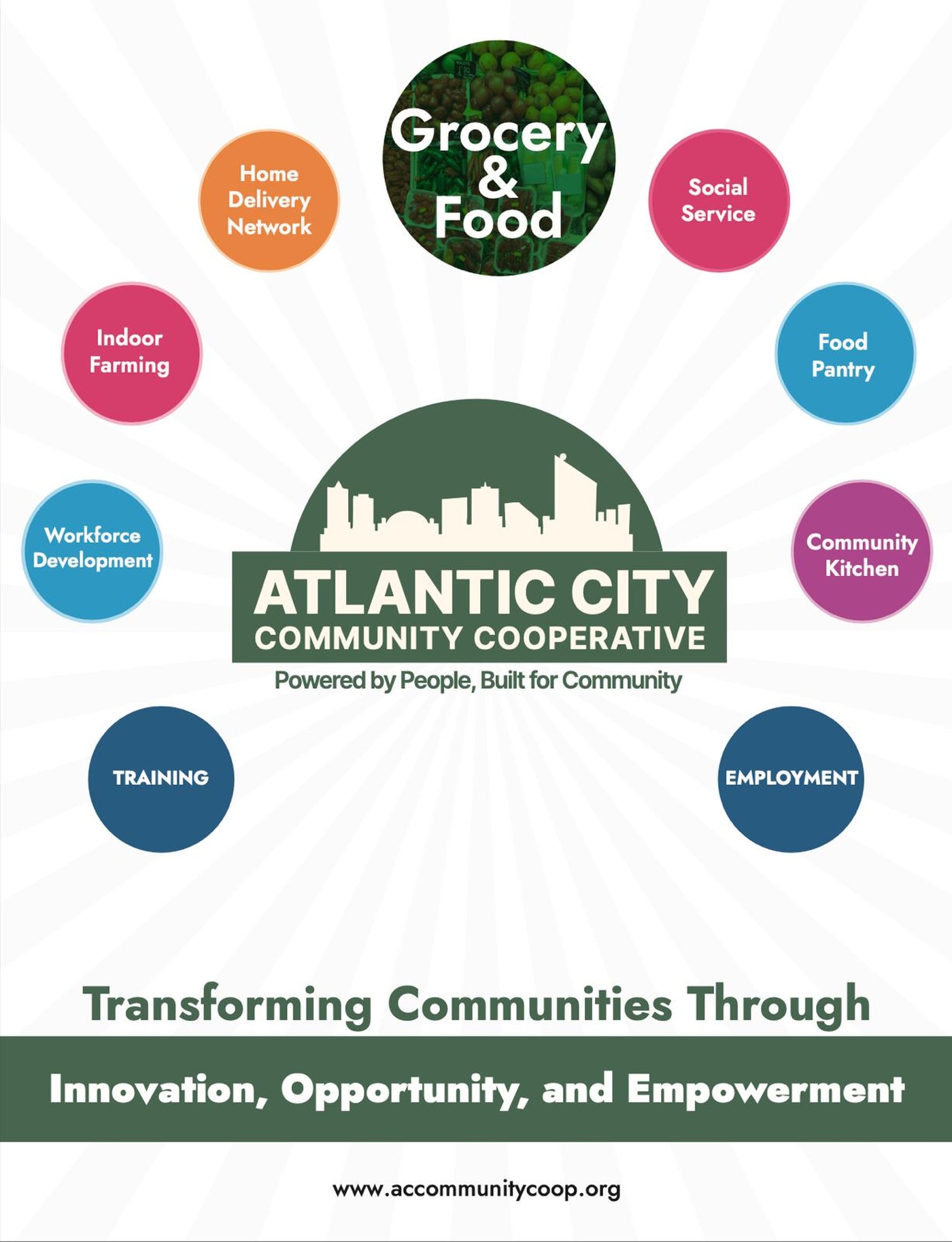
7 South Carolina Avenue: Building Community Economic Infrastructure
In 2024, NJEDA approved up to $703,000 for Ideal Education to acquire a vacant 20,000 square foot building at 7 South Carolina Avenue in Atlantic City.
The property is being developed as the physical home for a broader community economic-development model. The planned development includes a community cooperative food market, aquaponics, workforce and entrepreneurship activity, and community-serving infrastructure.
The objective is not simply to train residents to participate in the economy. It is to help residents participate in building, operating, and eventually owning more of that economy.
- $703,000
- NJEDA Local Property Acquisition Grant
- 20,000
- Square feet
- 5,000
- Square-foot planned cooperative grocery market
- Food Security
- Workforce Development
- Entrepreneurship
- Local Vendors
- Community Ownership
2016 to 2026
Ten years, one milestone at a time
The model was not designed on a whiteboard. It was assembled year by year, in response to what participants ran into.
2016
Ideal Institute opens; first student begins; WFNJ and Out-of-School Youth work begins.
2017-2018
Student-run enterprises, testing infrastructure, Tech-on-Wheels, Ideal Studio, school partnerships.
2019
GAINS apprenticeship expansion; VR Lab; employer-linked training.
2020-2021
Hybrid learning, institutional growth, accreditation preparation.
2022
Middle States accreditation; reentry and apprenticeship growth; 175+ students eligible for graduation.
2023-2024
CTE expansion; high school partnerships; Centenary University work-based college model.
2025
From Workforce Programs to Economic-Mobility Infrastructure
Ideal reaches its ten-year milestone while expanding into new areas of workforce and community development.
- 1,350+ graduates
- $1M+ in paid work-based-learning stipends
- $1.7M+ in scholarships
- 4,000+ people served through the Center for Social Impact
- 1,200+ certifications issued annually
- $1.5M Green Workforce Training Grant Challenge
- $250,000 NJLEAD reentry award
- Continued Atlantic City Community Cooperative development
- Continued growth of CAIT and AI workforce programming
2026
Newark expansion; continued WIOA youth work; IWOWS national economic-mobility framework.
What IWOWS Will Measure as the Model Expands
The IWOWS Economic Mobility Scorecard
Everything above is history. This is the instrument panel for what comes next. These are the measures IWOWS commits to reporting as the model expands, not results already achieved.
Education
- Credentials
- Completion
- Graduation
- Dual enrollment
Paid Work
- Paid placements
- Wages
- Hours
- Apprenticeships
Employment
- Placement
- Retention
- Wages
- Benefits
- Advancement
Public Assistance Transition
- Benefits planning
- Earned-income growth
- Benefit transition
- Financial stability
Entrepreneurship
- Businesses
- Revenue
- Contracts
- Jobs created
Family Stability
- Transportation
- Childcare
- Housing
- Digital access
- Savings
Community Ownership
- Cooperative members
- Local vendors
- Local purchasing
- Shared assets
The funder case
Ideal Is Not Starting With a Theory
IWOWS is being built on:
Investment opportunities
Where funding goes next
Seven defined places where capital moves the model forward, each with its own reporting.
Paid Work-Based Learning Fund
Participant wages and supervised work opportunities.
IWOWS Demonstration Community
Test the full economic-mobility model in one defined geography.
Youth Career Pathways
CTE, credentials, career exploration, and paid work.
Reentry Economic Mobility
Education, employment, entrepreneurship, and stability.
AI & Future of Work
Community access to AI tools, literacy, and workforce preparation.
Community Ownership
Cooperatives, local vendors, social enterprise, and shared assets.
Evidence & Evaluation
Longitudinal measurement, economic mobility research, benefits transition, and program evaluation.
Help Move the Model From Local Impact to National Scale
Ideal has spent a decade building the components. IWOWS brings them together into a measurable pathway from poverty and public assistance toward income, stability, entrepreneurship, ownership, and the middle class.
Impact Data & Transparency
- Historical impact reporting
- Ten-year institutional impact figures cover Ideal Institute of Technology's operations from 2016 through July 2025.
- Grant and contract reporting
- Public funding figures have been reconciled against Ideal's internal grant history and, where available, official award documentation from the issuing agency.
- Documented program funding
- The current verified program-funding total exceeds $9.83 million across youth workforce, welfare-to-work, apprenticeship, dislocated-worker training, construction, reentry, and green-workforce programs.
- Documented public investment
- Including the NJEDA Local Property Acquisition award of up to $703,000, Ideal's specifically documented public investment exceeds $10.53 million.
- Provider-only funding
- The Incumbent Worker Training engagement is excluded from the direct-grant total because Ideal served as a training provider rather than the direct grantee.
- Shared contracts
- Jointly held awards are not attributed entirely to Ideal unless Ideal's specific allocation can be documented.
- Participant counting
- The grant history's "Served" figures are program-period counts and should not automatically be interpreted as unduplicated individuals.
- Last updated
- August 29, 2026.
Documentation
- Annual reports
- Form 990
- Accreditation
- Government grant documentation
- Impact reports
- Evidence methodology
- Program history
Copies of the documents above are provided on request while the public documentation library is being published. Contact the partnerships team.
Sources & Documentation
Every figure on this page is drawn from the sources below.
- 1Ideal Institute of Technology. Ten-year institutional impact reporting (graduates, work-based learning payments, scholarships, social impact participants, enterprises, annual certifications). Reporting period through July 2025. iitnj.edu Last accessed August 29, 2026.
- 2Ideal Institute of Technology, Grants. Internal institutional grant history covering awards and program activity from 2016 through 2025, including Atlantic County, NJDOL, NJDOC, NJBUILD, and NJEDA-funded initiatives. Award periods 2016 through 2025. Last accessed August 29, 2026.
- 3New Jersey Department of Corrections, FY24 NJLEAD Awards. Official award list confirms Ideal Institute of Technology received $100,000 under Category C and $249,870 under Category D in FY24. FY24 award list. www.nj.gov/corrections/pages/grants.html Last accessed August 29, 2026.
- 4New Jersey Department of Corrections, FY25 NJLEAD. Official NJDOC documentation confirms a $250,000 FY25 award to Ideal Institute of Technology. FY25 award documentation. www.nj.gov/corrections/pages/grants.html Last accessed August 29, 2026.
- 5New Jersey Economic Development Authority. Official NJEDA documentation confirms Ideal Education was approved for up to $703,000 to acquire the 20,000 square foot building at 7 South Carolina Avenue, Atlantic City, under the Local Property Acquisition Grant Program. Board approval November 21, 2024. www.njeda.gov/ Last accessed August 29, 2026.
- 6Middle States Association Commissions on Elementary and Secondary Schools. Full accreditation of Ideal Institute of Technology for a ten-year term, awarded April 8, 2022, recorded in the institutional history. Accreditation term through July 2032. iitnj.edu/history/ Last accessed August 29, 2026.
- 7Ideal Education. Institutional program history and current developments, including Work First New Jersey and Out-of-School Youth programming, the Center for AI Technology, and the Newark expansion. Updated through August 2026. iitnj.edu Last accessed August 29, 2026.