

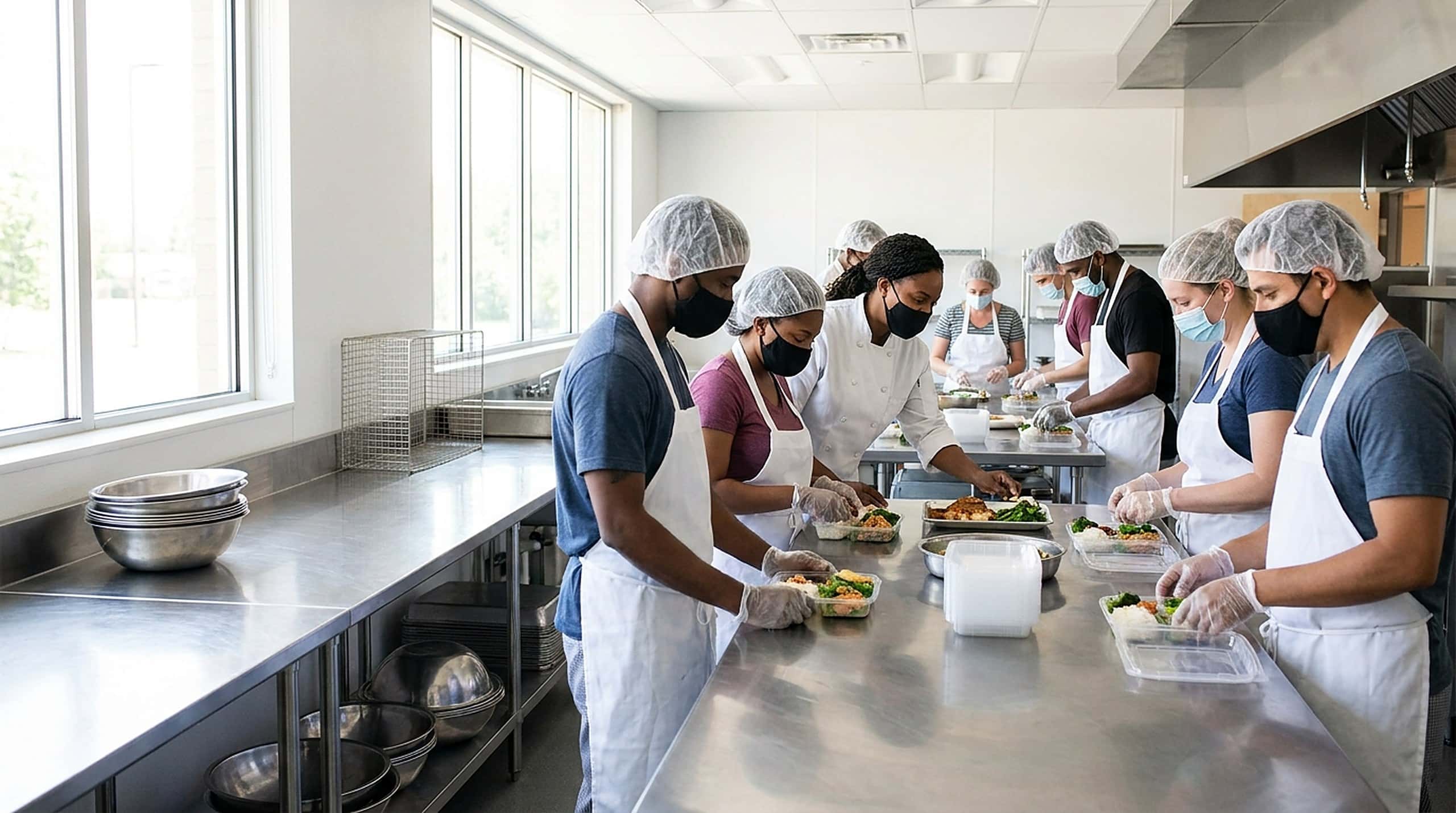
Food as Training, Business, and Ownership
Turning Food Needs Into Community Economic Opportunity
Food Enterprise & Community Food Systems connects food access with workforce development, entrepreneurship, local vendors, delivery, commercial kitchens, and community-owned markets.
Food Enterprise & Community Food Systems is the food-economy initiative of the IWOWS ecosystem, powered by Ideal Education. It connects food access with workforce training, entrepreneurship, commercial kitchens, food trucks, catering, delivery, local vendors, and community-owned markets, turning food needs into jobs, businesses, and ownership.
Food Access Is Also an Economic Development Issue
Communities experiencing limited food access often spend significant money outside their neighborhoods while local entrepreneurs struggle to find affordable kitchens, customers, delivery infrastructure, business support, and reliable markets. A community food strategy can do more than distribute food. It can create:
Integrated Food Enterprise Model
Community Markets
Create physical and online channels for residents to access food and for local vendors to reach customers.
Commercial Kitchen Access
Provide shared kitchen infrastructure for food entrepreneurs, caterers, food trucks, bakers, meal-preparation businesses, and packaged-food producers.
Food-Truck Entrepreneurship
Help participants understand food safety, menu development, pricing, operations, equipment, permitting, marketing, and customer acquisition.
Catering and Events
Create training and revenue opportunities through catering, community events, hospitality services, and institutional contracts.
Delivery and Logistics
Develop skills and jobs involving order management, customer service, picking, packing, routing, delivery, and platform operations.
Local Vendor Development
Help food businesses improve compliance, branding, pricing, online ordering, packaging, marketing, and market access.
Cooperative Food Ownership
Give members and community stakeholders opportunities to participate in the governance and economic value of local food infrastructure.
Urban Agriculture
Connect food systems with aquaponics, hydroponics, community agriculture, green jobs, and local sourcing where feasible.
Training Pathways
Participants may learn:
Who We Serve
This initiative can serve:
Partnership Opportunities
Partners can:
Outcomes We Seek
The initiative is designed to improve:
Results We Report
As the food system grows, the initiative reports verified data for:
Get involved
Build a Food System That Feeds and Employs the Community
Partner on food access, sponsor a food entrepreneur, provide equipment, become a vendor, or support community-owned food infrastructure.